Websites
as publications,
not templates.
Marketing sites, editorial platforms and commerce experiences designed like magazines and engineered like products. Every pixel defended by a principal.
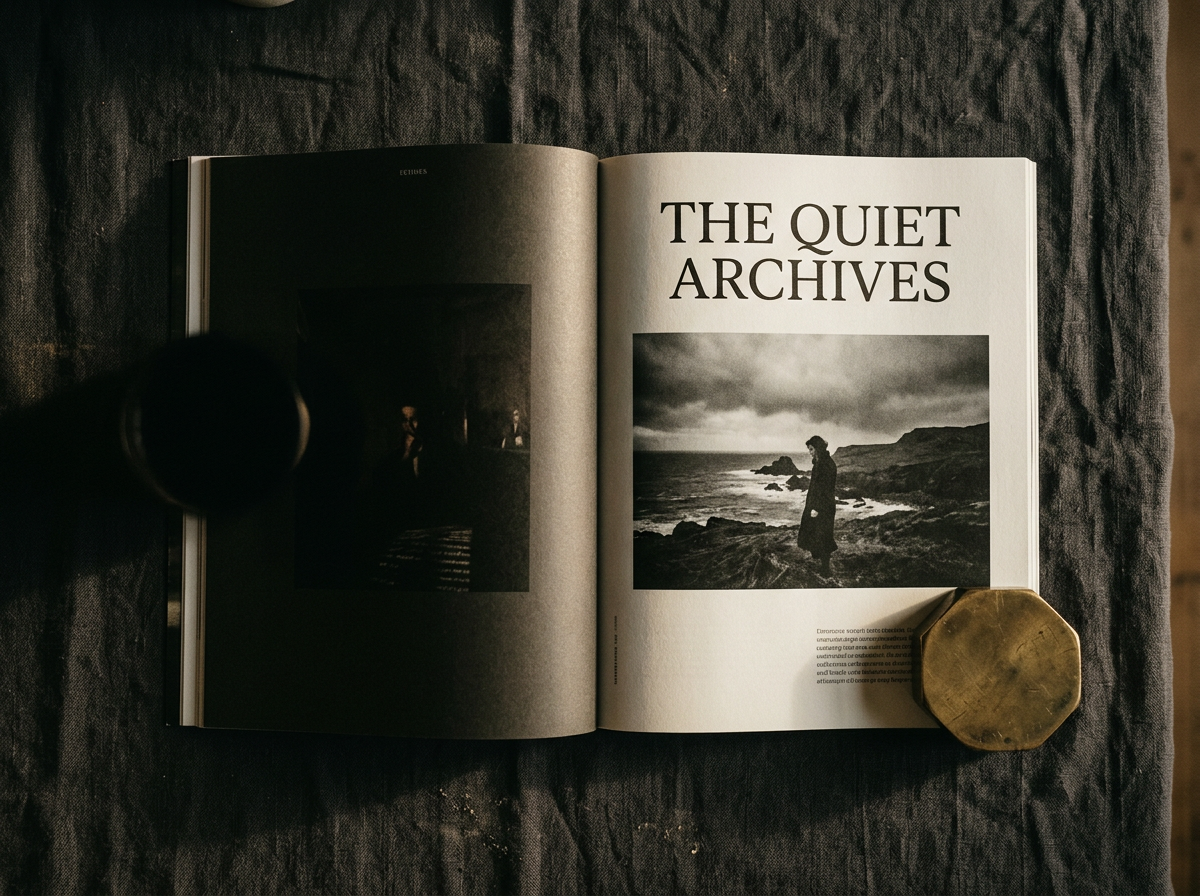
The Quiet Archives.
An in-progress publication on analog archives in the digital era — built on a house type system, custom article layouts, and a print-first rhythm that reads like a magazine you forgot you were reading on a screen.
Typography, grid, pacing, image treatment, and a reading progress language inherited from print. No template left un-deleted.
Plate 01 / Type
The Quiet Archives · editorial spread
 Plate 02 / Craft
Studio workstation · Ontario
Plate 02 / Craft
Studio workstation · Ontario
A marketing site that converts by being true.
We think marketing sites lie too easily. Ours work because they describe the product as it actually is — clearly, at length, with restraint. The conversion is a side-effect of honesty.
Craft here means: typography tuned across six breakpoints, images at the right weight, copy rewritten until each paragraph earns its line.
Engineered like a product.
We use the same rigor for a site as for a SaaS platform: type tokens, component libraries, CI, Lighthouse budgets, preview environments, Storybook where it earns its keep. No CMS-lock-in by default.
Stacks: Next.js, Astro, Remix, Eleventy, Sanity, Prismic, plain Markdown. The right tool for the cadence.
 Plate 03 / Build
Author's desk · code & lamp
Plate 03 / Build
Author's desk · code & lamp
What you receive.
Brand foundations
A house type system, color system, photography direction and voice guide — written, not just Figma-ed.
Editorial IA
Sitemap, page-level word-counts, article templates, ad units (if any). The structure before the skin.
Components
A typed, documented component library. Used on-site; portable to your own product.
CMS of your choice
Sanity, Contentful, Prismic, or none. We optimize for editor happiness — they live with it longest.
Performance
Lighthouse ≥ 95, Core Web Vitals green, real-user monitoring. Not a sticker — a budget.
Editorial handoff
A 30-page playbook: how to write, publish, photograph and commission for the site we built you.
Questions we hear often.
Common questions from founders and marketing leads evaluating a web engagement with Triune. If yours is not here, email us — we reply within one business day.
How much does a custom website cost in Canada?
Our editorial marketing sites start at around CAD $18,000 for a focused single-product site and run to CAD $60,000+ for a multi-template brand site with a design system and CMS. Custom web applications are priced separately against a written scope. We quote fixed numbers, not hourly rates, so the budget does not drift with the work.
How long does a website project take?
A focused marketing site is six to ten weeks from kickoff to launch. Sites with a design system, multiple templates, or custom integrations run ten to sixteen weeks. Custom web apps take longer and are scoped separately. We give you a written timeline in week one and hold to it — no open-ended projects.
Do you use WordPress, Webflow, or custom code?
We build on modern frameworks — Next.js, Astro, or Remix — paired with a headless CMS (Sanity, Contentful, Payload) when editors need to manage content. We do not build on WordPress. Webflow is a fine tool and we will tell you honestly if your project belongs on it rather than with us.
Will the site be fast and SEO-ready?
Yes. Every site ships with Core Web Vitals targets in the green, semantic HTML, JSON-LD structured data, a sitemap, an OpenGraph card, and an llms.txt for answer engines. We care about technical SEO the way a typographer cares about kerning — it is part of the craft, not an upsell.
Can you redesign my existing website?
Yes. Most of our web engagements are redesigns rather than greenfield builds. We begin with a week of research — analytics, content audit, stakeholder conversations — and decide together whether the project is a refresh, a rebuild, or a rethinking of the underlying system.
Do you offer ongoing website maintenance?
Yes. Every site comes with an optional stewardship retainer — content updates, performance audits, small design changes, and platform upkeep. Our goal is that the site gets better, not older, over its lifetime.